Medieval Door Colored Icons: A Designer's Stitch Review
As a designer who spends more time staring at stitch maps than most people spend looking at actual art, I approach every new machine embroidery design with a mix of curiosity and skepticism. We've all been there: you download a file that looks crisp on the screen, only to find it turns into a bird's nest of thread once it hits the fabric. That is why I took a close look at the Medieval Door Colored Icons collection before committing it to any client work or personal projects. This isn't just a quick glance at a thumbnail; this is an evaluation of how these graphics translate from vector lines to tangible, stitched reality.
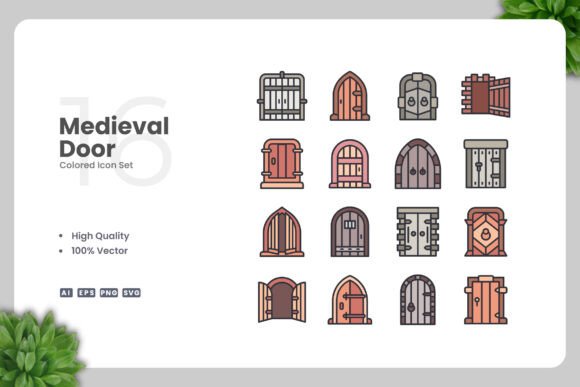
My first impression of the Medieval Door Colored Icons was defined by their simplicity. In the world of embroidery, "simple" is often a compliment, not a criticism. Complex gradients and microscopic details rarely survive the transition to thread, especially on textured fabrics. These icons feature clean lines and a distinct medieval aesthetic—think arched tops, heavy iron hinges, and perhaps a touch of wood grain texture—that feels sturdy and timeless. The mood they create is one of fantasy and history, perfect for adding a touch of storybook charm to modern items. Visually, they possess a strong personality without being overly busy, which is crucial for maintaining clarity in a finished product.
Putting the Design to the Test: A Real-World Scenario
To truly understand the value of these Icons, I imagined a specific project scenario that many of us face during the holiday season or craft fair prep. Let's say you are running a small shop selling custom tote bags and aprons. You want to create a "Fantasy Reader" series for a local bookstore or a Renaissance Faire vendor. The Medieval Door Colored Icons fit this brief perfectly. I visualized stitching one of these doors onto a heavy canvas tote bag design. Because the shapes are bold and the layout is straightforward, the design would stand out beautifully against the rougher texture of canvas.
Alternatively, consider a sweatshirt embroidery project for a gaming group or a D&D club. Placing a colored medieval door on the chest pocket area of a fleece hoodie creates an instant conversation starter. The clean nature of the design means it won't get lost in the pile of the fleece fabric. For baby embroidery, perhaps on a nursery pillow cover or a blanket, the softer, rounded elements of a medieval door can be quite soothing if the color palette is adjusted to pastels. The versatility here is high; these aren't just static images but adaptable assets that can shift from rugged outdoor gear to delicate nursery decor depending on your thread choices.
Navigating Fabric and Hoop Challenges
While the design is promising, practical application requires caution. One of the critical factors when working with any digital embroidery file is how it behaves on different materials. Since the product description highlights that these are easy to edit in vector software, you have the advantage of resizing. However, be mindful of your hoop size. If you shrink these icons too much for a small cap or a tiny patch, the fine details of the door frame or hinges might merge together. Stitch density becomes a major concern here; if the original vector has tight spacing, scaling down could lead to thread breaks or poor coverage.
Textured fabrics present another variable. On a waffle-knit towel or a thick wool blend, a running stitch outline might get swallowed up. In these cases, you might need to adjust the design to use more fill stitch or even convert parts of it into an applique design if your machine and skills allow. Dark fabrics also require attention. If the icon relies on subtle shading, it might vanish on black denim. Always test your thread colors against the background fabric first. A high-contrast combination usually works best for these types of graphic icons to ensure the "door" remains recognizable from a distance.
Enhancing Brand Value and Customer Appeal
For Etsy sellers and creative entrepreneurs, the visual appeal of your product directly impacts customer trust. Using a cohesive set of Graphics like the Medieval Door Colored Icons helps establish brand consistency. If you sell a line of fantasy-themed goods, having a recognizable motif that appears on your tags, packaging, and products creates a professional image. Customers appreciate when a handmade product looks intentional and well-executed. A blurry or poorly stitched design can undermine the perceived value of even the highest quality garment.
These icons also excel in creating "giftability." A personalized gift featuring a unique medieval door symbol feels thoughtful and curated, rather than mass-produced. Whether it is a wedding gift for a couple who loves history or a holiday present for a book lover, the specificity of the theme adds emotional weight. Furthermore, for those creating printable mockups to sell digital previews or list items online, the clean lines of these icons render very well in photos, making your listings pop in a crowded marketplace.
Essential Notes for the Embroidery Designer
Before you launch into full production with the Medieval Door Colored Icons, here are a few practical steps I recommend based on years of trial and error:
- Test on Scrap First: Never skip the sample run. Use the exact fabric and stabilizer you plan to use for the final item to check for puckering or registration issues.
- Check Contrast: View your design in black and white on your screen. If the details disappear in grayscale, they might lack sufficient contrast when stitched.
- Review Stitch Density: If the design feels too stiff after stitching, you may need to reduce the fill density in your editing software to keep the fabric drapable, especially for apparel.
- Inspect Small Details: Zoom in on the hinge and handle areas. Ensure there is enough space between stitches to prevent thread buildup.
- Verify Licensing: Since this is intended for commercial use, double-check the specific license terms provided with the download to confirm you can sell finished items or digital derivatives.
- Stabilizer Selection: Match your stabilizer to the fabric weight. A cut-away stabilizer is often safer for stretchy fabrics like t-shirts to prevent distortion over time.
Ultimately, the Medieval Door Colored Icons offer a solid foundation for a variety of embroidery projects. They bridge the gap between digital convenience and tactile craftsmanship. While they are marketed for web and print, their clean geometry makes them surprisingly robust for commercial embroidery when handled with care. By respecting the limitations of thread and fabric, and by taking the time to tweak the settings for your specific machine, you can turn these simple graphics into stunning, durable assets for your craft business. Whether you are decorating a single custom apparel piece or rolling out a new collection for your small shop, these icons provide the kind of reliable, thematic flair that customers love to take home.